Why Spring Thaw Hits Waterbury Basements So Hard
Spring in Waterbury brings a predictable but dangerous sequence: frozen ground thaws from the top down, snowmelt and heavy rain arrive together, and the soil around your foundation becomes saturated faster than it can drain. Because the ground below is still frozen or nearly so, water has nowhere to go but sideways, and that means toward your foundation walls and basement floor. This is the season when many homeowners who stayed dry all winter suddenly find dampness, white powder on the walls, or standing water after a storm.
The Naugatuck River and its tributaries add another layer of risk. When the river runs high after a thaw, storm runoff in low-lying neighborhoods has less capacity to drain away, and the water table rises. Homes near the river and in older parts of the city often sit on shallow foundations and aging drain systems that were never designed for the intense rain events we see now. Understanding this seasonal pattern is the first step toward real Basement Waterproofing that holds up year after year.
Storm Flooding and the Naugatuck River: What Homeowners Should Know
When people talk about Naugatuck River flood risk for basements, they usually picture a dramatic river overflow. In reality, most basement flooding in Waterbury happens from the ground up, not the river in. Saturated soil pushes water against foundation walls, hydrostatic pressure builds, and water finds the weakest point: a hairline crack, a cove joint, a failed window well, or a floor drain that backs up when the municipal storm system is overwhelmed. During a heavy spring storm, all of these can happen at once.
That is why flood prevention has to address water before it reaches the basement, not just after it appears. A proper assessment looks at grading and downspouts, the condition of the foundation, and how groundwater behaves on your specific lot. Homes on sloped streets, near storm drains, or downhill from neighbors can face concentrated runoff that no single fix will solve. The right combination of drainage and sealing depends on your property, which is why a site visit matters more than any generic checklist.
Seasonal Basement Leaks: Warning Signs You Should Not Ignore
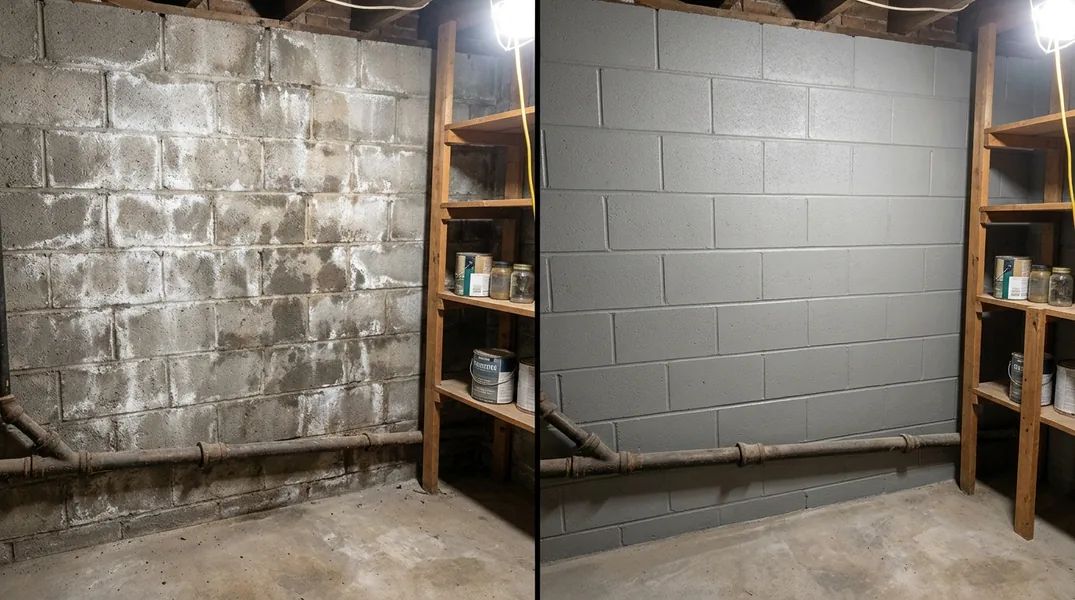
Seasonal basement leaks often announce themselves quietly before they become expensive. You might notice a musty smell that worsens after rain, efflorescence (the chalky white residue left when water evaporates through concrete), dark staining at the base of walls, or a floor that feels damp underfoot. Small cracks that look harmless in January can weep steadily by April. Catching these signs early is far cheaper than repairing a finished basement or replacing a furnace and water heater damaged by standing water.
It is also worth checking the outside of your home during the first warm weeks of spring. Look for gutter downspouts that discharge right against the foundation, soil that has settled and now slopes toward the house, and window wells that collect water. Correcting these simple issues helps, but they rarely solve a persistent problem on their own. If you have seen water more than once, it is time to talk to a professional about Foundation Waterproofing and a drainage plan built for your home.
Proven Flood Prevention Strategies for Waterbury Homes
Effective flood prevention starts with managing water at the source. An Exterior Basement Waterproofing approach, which includes proper grading, footing drains, and membrane protection along the foundation, keeps groundwater away from the walls in the first place. Where exterior work is impractical, an Interior Drain Tile System captures water that reaches the basement and routes it to a sump pump, protecting the floor and finished space. Many homes benefit from a combination of both, tailored to how water actually moves on the property.
Sump pumps deserve special attention during spring thaw. A pump that ran fine last year can fail under constant load, and a power outage during a storm can leave it useless. Battery backup systems and regular testing are inexpensive insurance. Homeowners in Watertown and Thomaston face the same thaw-and-runoff pattern, and the same principles apply: control the water, maintain the system, and fix small problems before they grow. If you want to know what a tailored plan would involve, you can request a free estimate and get clear answers about your options.
Basement Waterproofing Near Me: When to Call a Waterbury Professional
Some spring dampness is normal, but recurring moisture is not. Call a professional when you see standing water after storms, cracks that widen or weep, a sump pump that runs constantly, or any sign of mold or rot. These are signals that the current system, if there is one, is no longer keeping up with how water behaves around your foundation. Waiting through another season usually makes the repair larger and the pricing higher.
Waterbury Waterproofing works with homeowners across the city to diagnose the real cause of seasonal basement leaks and storm flooding, then recommend the least invasive solution that will actually solve it. That might be improved drainage, foundation crack repair, a new interior system, or a combination. You can reach the team at (475) 263-4038 to discuss your situation or schedule a visit. Getting ahead of the spring thaw is the best way to keep your basement dry when the next storm rolls through.
Looking for a professional basement waterproofing contractor in Waterbury? Waterbury Waterproofing responds fast for all your basement waterproofing needs.
Get a Free QuoteOur services: Basement Waterproofing · Interior Drain Tile System · Exterior Basement Waterproofing