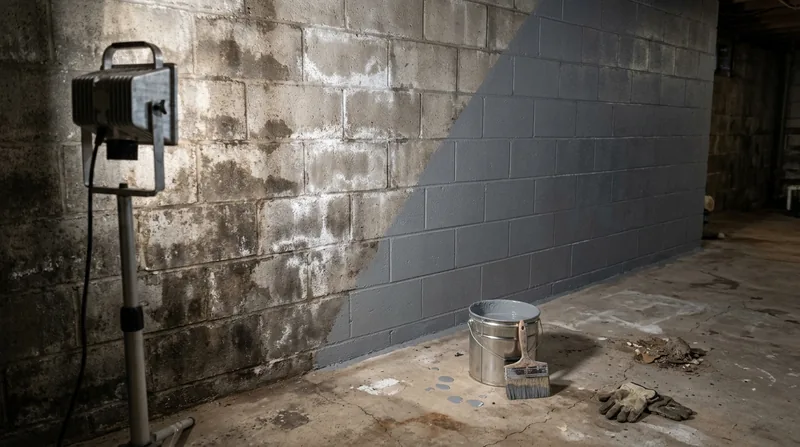




Basement Wall Sealing in Waterbury starts with an honest look at what your wall is actually doing. This city sits in a valley of glacial till over schist and gneiss, and the hillsides of Town Plot, Bunker Hill and Brooklyn are packed with 1890s to 1930s workers' houses and brick two-families on full basements. Those old stone, brick and early block walls were never meant to hold back a rising water table, and every freeze-thaw winter works the mortar and the hairline cracks a little wider. When spring rain and nor'easter runoff come down the hillside streets, the water finds those openings. We prep the wall, strip the efflorescence, and apply a penetrating or membrane sealer that actually bonds to the substrate, but we tell you up front when a sealer is the right answer and when the real problem is hydrostatic pressure that no coating will stop. Call (475) 263-4038 and we will look at the wall before we sell you anything. If you want the full picture of how sealing fits into a drainage plan, start with our basement waterproofing service.
Why Waterbury Basements Sweat, Stain and Seep
Waterbury is a valley town with thin soil on the ridges and deep glacial till in the low ground, and the seasonal water table climbs hard in the Naugatuck River bottoms and the Mad River floodplain. The 1955 flood still marks the low lots, and the older walls in Hopeville and Pine Hill carry that history in their mortar joints. Most of the seepage we see is not a failed sealer, it is water pushing through the wall from the outside. Sealing the interior face helps with dampness and efflorescence, but it cannot hold back a head of water.
- Stone and brick walls in Town Plot wick groundwater and leave white efflorescence blooms after every wet spring.
- Early block walls in Bunker Hill develop shrinkage cracks that open and close with the freeze-thaw cycle.
- 1940s to 1960s Cape Cods on the Westside have partial basements where the grade sits close to the sill.
- 1970s to 2000s colonials on the ridges have poured walls with cold joints and tie holes that weep under hydrostatic pressure.
- Old clay footing drains in the valley have collapsed or silted in, so water stacks up against the wall instead of running away.
Read the wall before you read the label on the bucket. That is the difference between a sealer that lasts and one that peels off by the second spring.
Key info: A homeowner on a hillside street off Bunker Hill called us about white powder on a brick wall and a musty smell after rain. The wall was damp, not wet. Efflorescence removal plus a breathable penetrating sealer solved it. A neighbor two streets down had standing water at the cove and needed an interior perimeter drain, not a coating. Same city, different problem.
For the state's consumer guidance on hiring home improvement contractors, the Connecticut Department of Consumer Protection registers contractors and publishes license lookups at portal.ct.gov/DCP. Verify any waterproofing contractor there before you sign.
How We Seal a Waterbury Basement Wall, Step by Step
We do not roll sealer onto a wet wall and call it done. The prep work decides whether the product holds, and on old Waterbury masonry that means grinding out loose mortar, wire-brushing the surface and letting the wall dry to a workable moisture level. We test for active seepage first, because a wall that is leaking under pressure needs crack injection or drainage before any coating goes on. Here is the sequence we run on a typical job.
- We walk the basement and mark every damp patch, crack, tie hole and cold joint.
- We check grade and downspouts outside, since a downspout dumping at the foundation undoes any sealer.
- We remove efflorescence and loose parging with a wire brush and masonry cleaner.
- We inject active cracks with epoxy or polyurethane before sealing, so the sealer is not bridging a moving joint.
- We apply the penetrating or membrane sealer in the correct number of coats for the substrate.
- We leave you a written note on what the wall is doing and what to watch for next spring.
If the inspection shows water stacking against the footing, we will say so and point you to drainage rather than sell a coating that will fail.
Key info: On a 1920s brick two-family in the Brooklyn neighborhood, the wall was damp but dry to the touch two days after rain. We removed efflorescence, sealed with a breathable penetrating product and extended the downspouts. On a 1950s split-level in Hopeville, the same symptoms came with water on the floor after storms. That wall needed crack injection and an interior drain tile system, not sealer.
Sealing Approaches We Use on Waterbury Walls
Not every wall takes the same product. Stone, brick, block and poured concrete behave differently, and a membrane that works on a poured wall in a ridge subdivision can trap moisture in an old brick wall in Town Plot. We match the approach to the substrate and to what the wall is actually doing.
| Approach | Description | Best for |
|---|---|---|
| Penetrating sealer | Soaks into the masonry and reacts to form a barrier inside the pore structure. | Damp stone and brick walls that need to breathe. |
| Membrane sealer | Forms a flexible film on the surface that bridges hairline cracks. | Poured and block walls with minor seepage. |
| Crack injection first | Epoxy or polyurethane injected through ports to fill an active crack. | Walls with a visible leaking crack before sealing. |
| Efflorescence removal | Masonry cleaner and wire brushing to strip mineral bloom and loose parging. | Any wall with white powder or flaking surface. |
| Drainage recommendation | Honest redirect to interior or exterior drainage when pressure is the cause. | Walls with water on the floor after rain. |
The table is a starting point, not a menu. The wall tells us which row applies.
Basement Wall Sealing Cost in Waterbury: What to Expect
Most basement wall sealing jobs in Waterbury start around $1,500 for a typical basement with damp walls and no active leaking. That figure covers surface prep, efflorescence removal and the sealer itself. The number moves up with wall length, how much parging has to come off, whether cracks need injection first, and whether the basement is packed with stored belongings that slow the crew down. A stone wall in a Town Plot cellar takes more prep than a poured wall in a 1990s colonial.
We quote after we see the wall, not over the phone. Two or three written estimates on the same scope is the smart way to compare, and any contractor who quotes sealing without checking for hydrostatic pressure is guessing. Our full breakdown of rates and what each line covers is on the pricing page.
Choosing a Basement Wall Sealing Contractor Near Waterbury
Waterbury has plenty of outfits that will roll sealer on a damp wall and disappear. The ones worth hiring will look at the outside grade, check for active seepage and tell you when sealing is not the answer. Ask for the license and insurance certificate before work starts, and confirm the scope in writing so you know what is being sealed and what is not.
- Confirm the contractor is registered with the Connecticut Department of Consumer Protection and carries liability and workers' comp coverage.
- Get two or three written estimates that describe the same prep and the same product.
- Ask for references from basements with the same wall type as yours, stone or block or poured.
- Ask whether the job needs a permit, since work that alters drainage or the sump discharge connection may require one from the local building department.
- Check whether your neighborhood or HOA has rules on exterior work and discharge line routing before the crew arrives.
If a contractor cannot answer those questions clearly, keep calling. You can reach us at (475) 263-4038 or through our contact page to set up a free basement inspection.
Basement Wall Sealing in Waterbury: Pricing Guide
| Service | Price | Details |
|---|---|---|
| Single wall sealing | Starting at $1,500 | Includes efflorescence removal, surface prep and one penetrating or membrane sealer coat on a typical basement wall. |
| Full basement sealing | Starting at $2,400 | Covers all perimeter walls, with cost rising on long runs and heavy parging removal. |
| Crack injection before sealing | Starting at $450 per crack | Epoxy or polyurethane injection through ports on active cracks, priced by crack length and access. |
| Stone or brick wall prep | On estimate | Older masonry needs repointing and extra prep, so we look before quoting a number. |
| Travel | Included | In Waterbury and surrounding areas, no separate call-out or mileage fee. |
| Estimate | Free | Response within 24h at (475) 263-4038, no obligation to book. |
Indicative pricing, the exact cost depends on square footage, finish, and site access. Free personalized estimate within 24h at (475) 263-4038.


